Michel François Préaulx
(active c. 1796–1827)
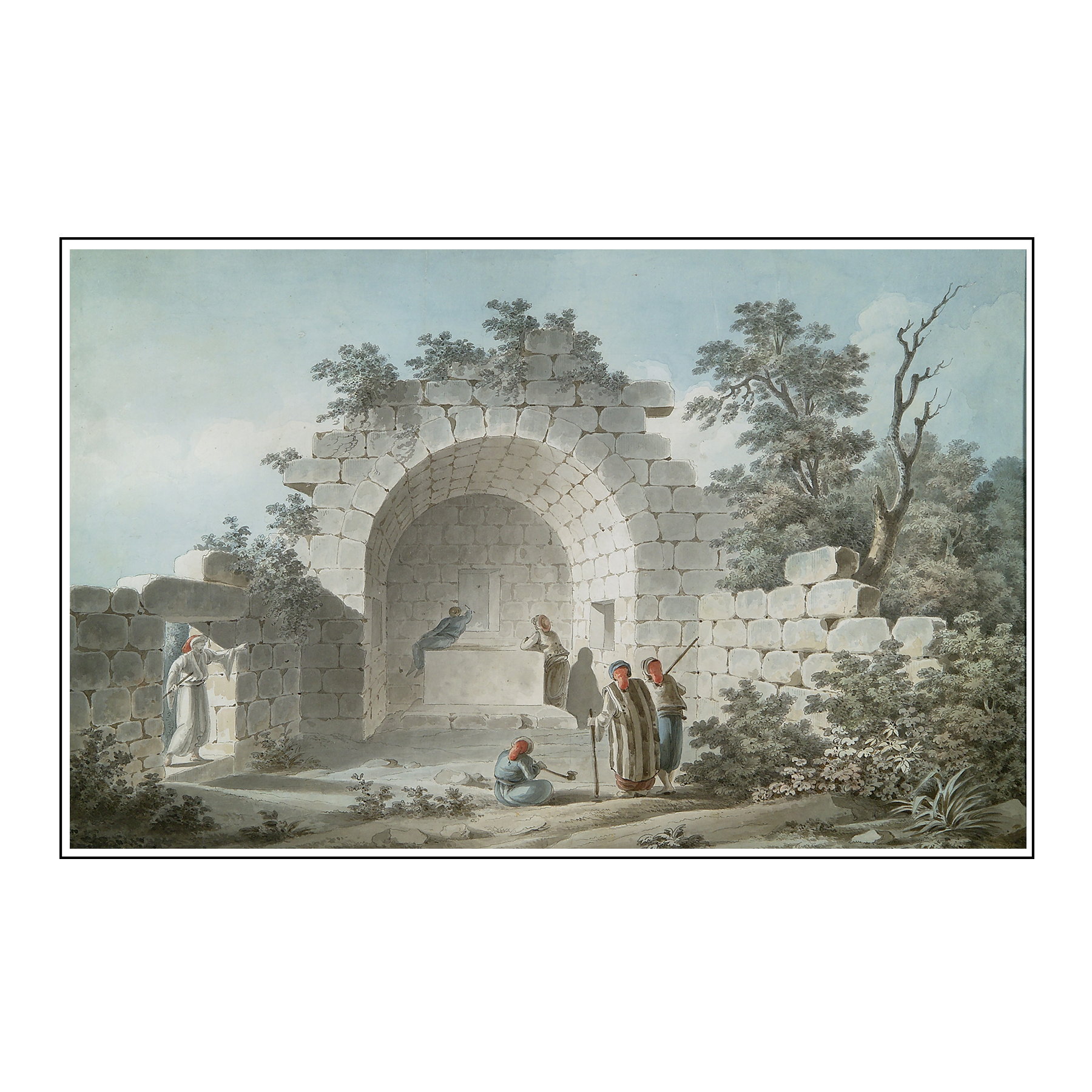
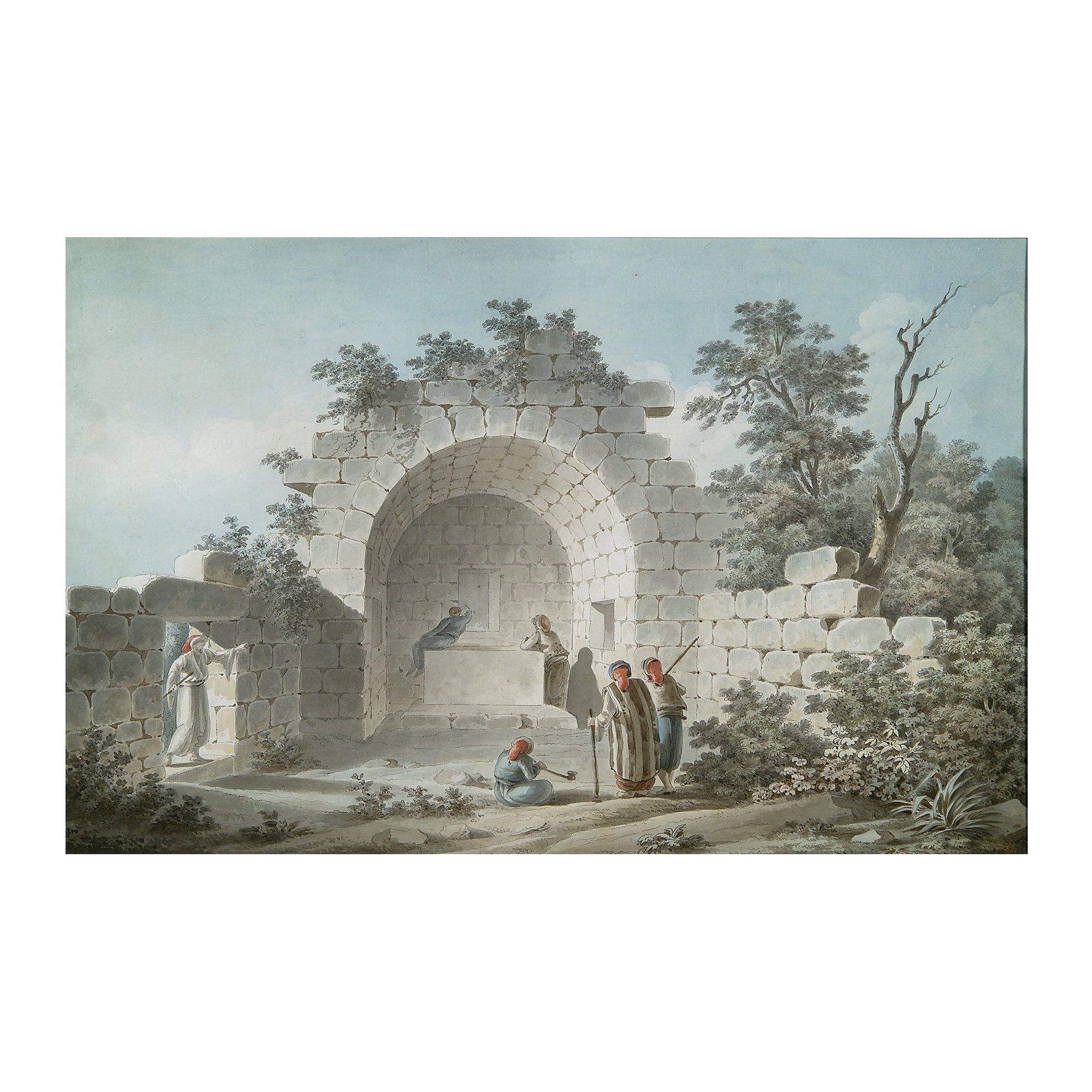
Underground Monument (or “Palace of Priam”) in Alexandria Troas with Figures in Oriental Costumes
Circa 1801.
Gray ink, pen, and watercolor.
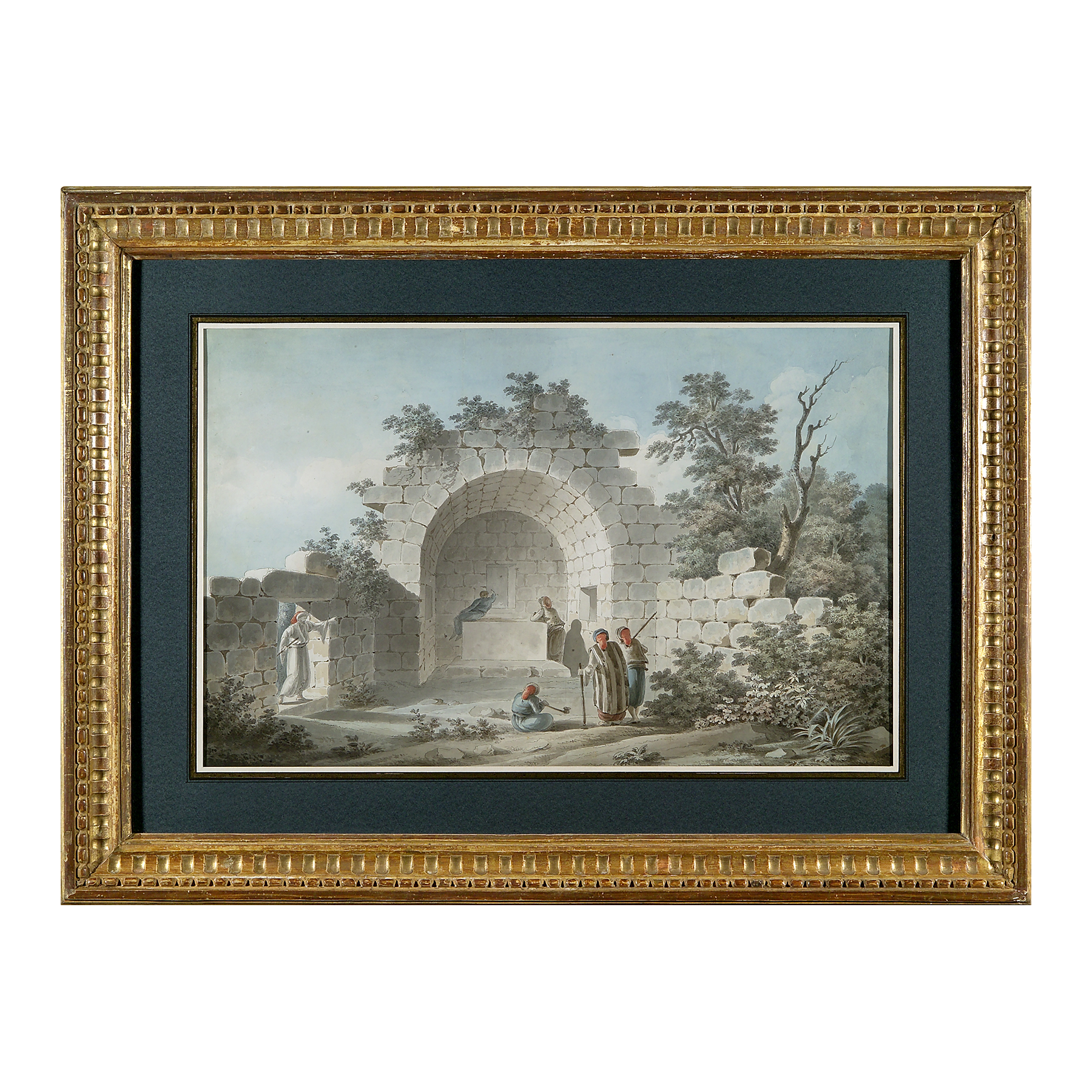
330 mm x 520 mm – 12 63/64 x 20 ½ in . (With frame: 540 mm x 720 mm – 21/8 x 213/16 in.)
Antique gilded wood frame.
Michel-François Préaulx was a French painter and draftsman active in the Ottoman Empire and Greece at the turn of the 18th and 19th centuries. Working in Constantinople beginning in 1796, he is known for his topographical views and architectural surveys of antiquities commissioned by prominent Western European travelers and diplomats (notably the Count of Choiseul-Gouffier and the English archaeologist John Tweddell).
This sheet illustrates the artist’s picturesque and neoclassical taste for the ruins of ancient Greece and the Levant, combining the precision of architectural documentation with an Orientalizing genre scene.
It depicts the “Underground Monument” (or “Palace of Priam”) in Alexandria Troas (in the present-day province of Çanakkale, Turkey).
Located in the Troad (western Anatolia), this large ruined Roman complex was commonly referred to in the early 19th century by Western travelers by the picturesque name “Palace of Priam ,” although it is in fact the remains of the Roman baths or a cryptoporticus/heroon in Alexandria in the Troad (Eski Stamboul). The imposing vaulted structures built of cut stone (including a main barrel vault housing a basin/sarcophagus or an altar) are characteristic of the topographical and archaeological surveys conducted on site by Michel-François Préaulx around 1801 (notably during his expeditions to the Levant with the British scholar Edward Daniel Clarke and on behalf of the Count of Choiseul-Gouffier).
A version similar to this subject, executed by Préaulx and titled *Interior of the Palace of Priam*, Alexandria Troas, of comparable dimensions, is held at the Victoria and Albert Museum in London (inv. SD.821), and other plates from this series appear in the inventory of surveys of the Troad published during the Empire and the Restoration.
Condition report: Very good condition. Framed under glass.


